


Veolia, Sun Hung Kai Properties and CITIC Pacific join forces to promote green energy Tseung Kwan O South East New Territories Landfill Solar Farm officially commences operation
 Share
Share
Veolia, Sun Hung Kai Properties and CITIC Pacific
join forces to promote green energy
Tseung Kwan O South East New Territories Landfill Solar Farm
officially commences operation
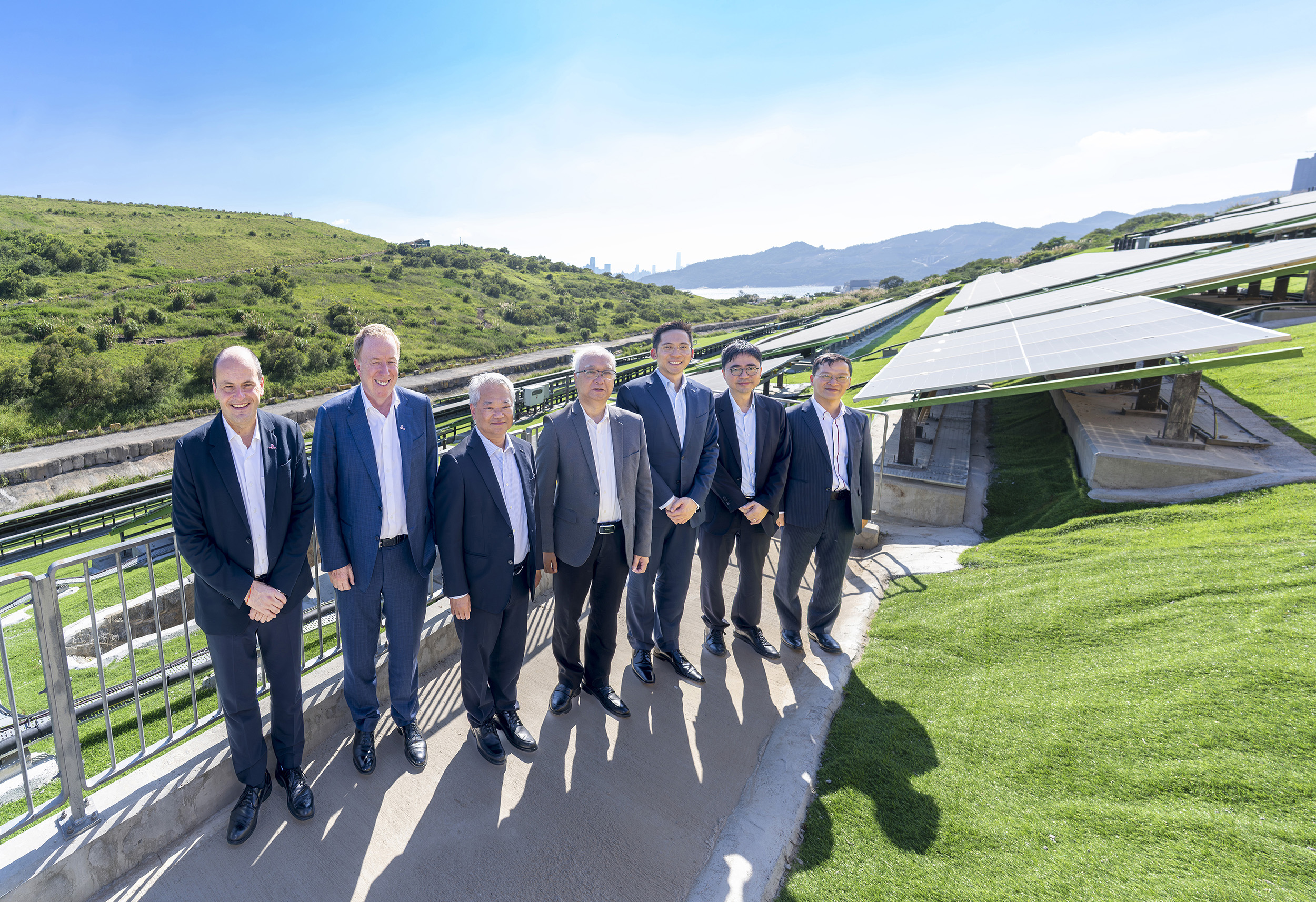
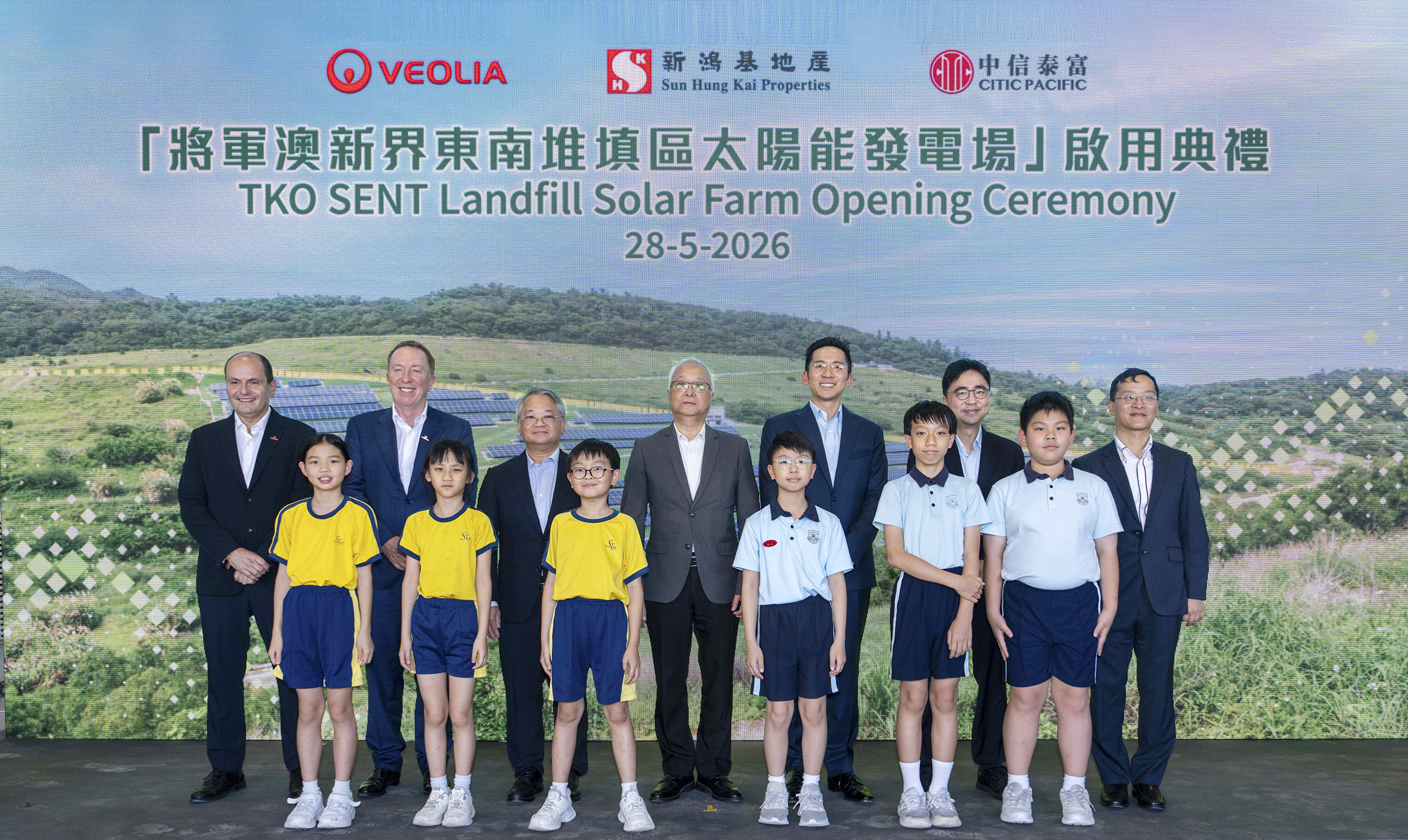
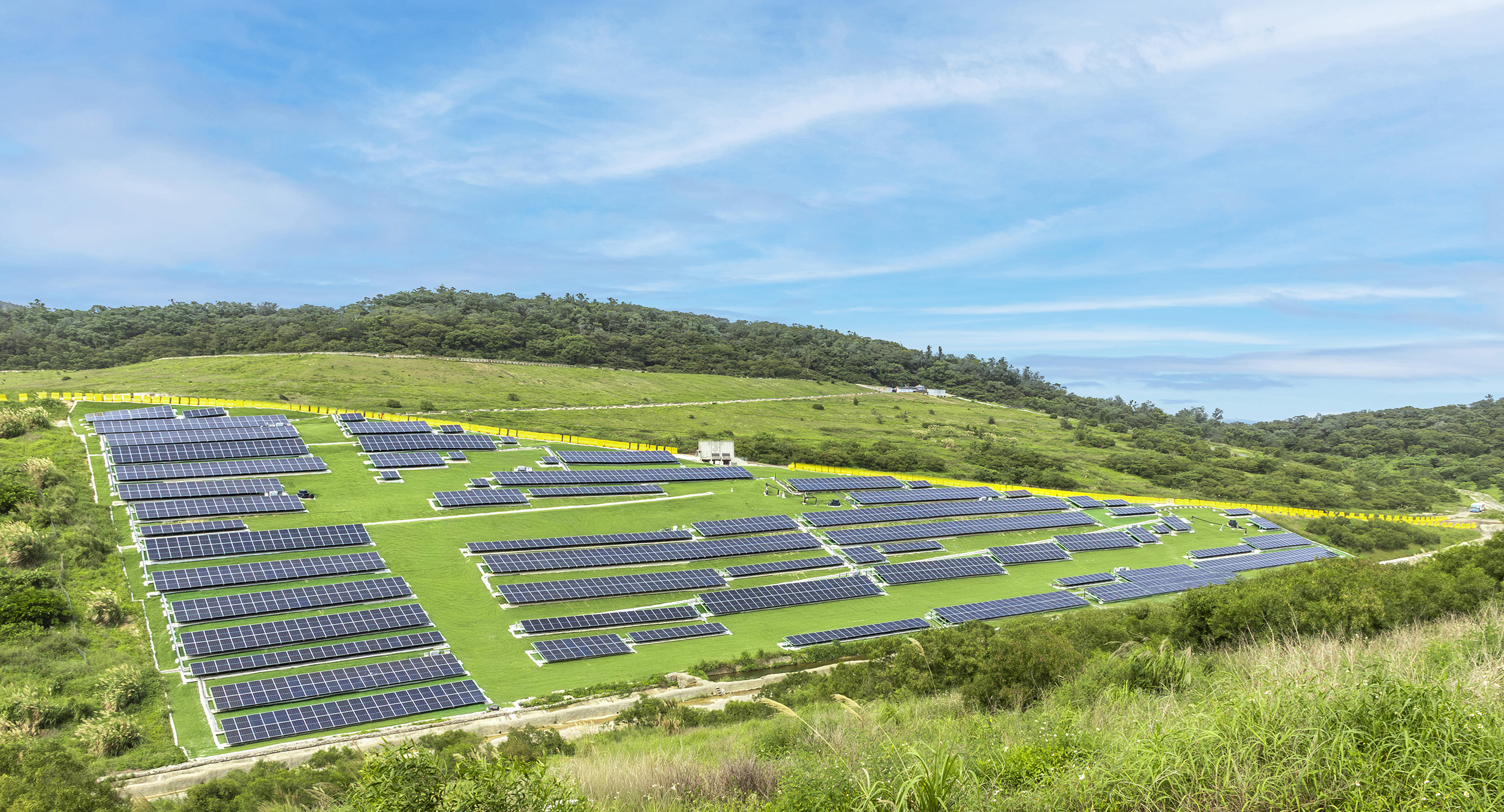
The Tseung Kwan O South East New Territories Landfill Solar Farm, jointly developed by Veolia, Sun Hung Kai Properties (SHKP) and CITIC Pacific, has officially commenced operation. The project marks a significant milestone in Hong Kong’s renewable energy development and contributes to achieving the nation’s carbon neutrality target by 2060 and Hong Kong’s target by 2050.
This project is Hong Kong’s first solar farm built on a restored landfill that participates in the Feed-in Tariff Scheme. It is also the largest solar power installation of its kind in the city.
Operated by Green Valley Landfill Limited, a joint venture among Veolia, SHKP and CITIC Pacific, the solar farm spans approximately 140,000 square feet and features around 1,850 solar panels. Completed and commissioned in the fourth quarter of 2025, it generates about 1.2 million kWh of green electricity each year, enough to meet the yearly power needs of about 360 households. The project also reduces carbon emissions by about 530,000 kilograms per year, equivalent to the environmental benefit of planting about 20,000 trees.
Built on a restored landfill, the project enables the site to achieve three green functions: construction waste processing, landfill gas production and utilization, and solar power generation. This integrated approach maximizes land use efficiency while supporting Hong Kong’s transition to a low-carbon and sustainable future.
An opening ceremony was held today, with Chief Executive John Lee delivering a congratulatory address via video message. Officiating guests included Secretary for Environment and Ecology Tse Chin-wan; Director of Environmental Protection Dr Samuel Chui; Chief Executive Officer of Veolia Asia Pacific Zone Gavin Graveson; Chief Executive Officer of Veolia Hong Kong and Macau Laurent Pelletier; SHKP Executive Director Christopher Kwok; SHKP Executive Director Allen Fung; and Vice President of CITIC Pacific Kwok Ka-wa.
Chief Executive John Lee said, “Investors in this solar farm come from the Mainland, overseas, and Hong Kong. Their participation not only supports the development of renewable energy in Hong Kong, but also injects fresh momentum into realising our goal of achieving carbon neutrality before 2050. As the saying goes, alone we can do so little; together we can do so much. Tackling climate change through green energy development and safeguarding energy security cannot rest on the government alone. It requires the active participation from all sectors of society. The government is fully committed to creating the right conditions for sustainable development, encouraging market investment and enabling businesses to leverage their technological strengths to turn ideas into concrete projects. This integration of a capable government with an efficient market is precisely the key to driving Hong Kong’s energy transition.”
Secretary for Environment and Ecology Tse Chin-wan said the Tseung Kwan O Landfill Solar Farm is the second solar power project in Hong Kong built on a restored landfill site and the largest of its kind to date. The facility is expected to generate about 1.2 million kWh of renewable electricity annually, equivalent to the yearly electricity consumption of around 360 households, and reduce carbon emissions by about 530,000 kilograms. He said, “I would like to express my heartfelt gratitude to the entire project team for their dedicated efforts, from planning through to construction. I am confident that this green momentum will drive the high-quality development of Hong Kong’s green energy sector during the National 15th Five-Year Plan period, and support the city’s progress towards achieving ‘net-zero electricity generation’ and ‘carbon neutrality’ by 2050.”
Veolia Asia Pacific Zone’s Chief Executive Officer Gavin Graveson, said: “This project demonstrates that with innovation and collaboration, we can transform overlooked infrastructure into productive assets. What makes today significant is taking an idle landfill slope and turning it into Hong Kong's largest solar installation of its kind – proof that existing sites can be repurposed to meet tomorrow’s energy needs. Around the world, Veolia works to build environmental security for society, businesses, and the public sector. This project brings that ambition to life in Hong Kong.”
SHKP Executive Director Christopher Kwok said: “This project serves as a strong demonstration of the potential for developing solar energy on landfill sites and other undeveloped land. The restored area of this landfill covers 80 hectares, while the current project uses only about 140,000 square feet, which is less than 2%. This highlights the significant potential capacity for installing additional solar panels. We can build on the success of this pilot project to make better use of the remaining land resources at landfill sites. I believe that with further supportive and encouraging measures from the government, the industry will respond proactively and work together to advance this development.”
He said SHKP has long been committed to promoting solar energy, green buildings and green transportation. To date, the solar power systems facilitated and managed by SHKP – including those developed through joint ventures – comprise 94 installations, with nearly 27,000 solar panels across various buildings and construction sites. If counting those installed by the Group’s principal associate Kowloon Motor Bus, the total exceeds 57,000 panels, forming the largest solar power network in Hong Kong.
SUNeVision, a subsidiary of SHKP and Hong Kong’s largest data centre provider, has purchased CLP Renewable Energy Certificates linked to the solar power generated by the solar farm. This initiative forms a closed-loop ESG model within SHKP, supporting SUNeVision in achieving 100% clean energy usage in its operations and its goal of carbon neutrality by 2050.
The project also serves as an educational platform to promote low-carbon awareness. Following the opening ceremony, students from two primary schools participated in an educational talk and a guided tour at the solar farm, gaining insights into solar technology and its environmental benefits. The programme fostered interest in STEAM learning and contributed to building a talent pipeline for Hong Kong’s sustainable development. Looking ahead, the solar farm will continue to organize educational and community activities to extend the reach of low-carbon awareness across the wider community.







The Tseung Kwan O South East New Territories Landfill Solar Farm, jointly developed by Veolia, Sun Hung Kai Properties (SHKP) and CITIC Pacific, has officially commenced operation. The project marks a significant milestone in Hong Kong’s renewable energy development and contributes to achieving the nation’s carbon neutrality target by 2060 and Hong Kong’s target by 2050.
This project is Hong Kong’s first solar farm built on a restored landfill that participates in the Feed-in Tariff Scheme. It is also the largest solar power installation of its kind in the city.
Operated by Green Valley Landfill Limited, a joint venture among Veolia, SHKP and CITIC Pacific, the solar farm spans approximately 140,000 square feet and features around 1,850 solar panels. Completed and commissioned in the fourth quarter of 2025, it generates about 1.2 million kWh of green electricity each year, enough to meet the yearly power needs of about 360 households. The project also reduces carbon emissions by about 530,000 kilograms per year, equivalent to the environmental benefit of planting about 20,000 trees.
Built on a restored landfill, the project enables the site to achieve three green functions: construction waste processing, landfill gas production and utilization, and solar power generation. This integrated approach maximizes land use efficiency while supporting Hong Kong’s transition to a low-carbon and sustainable future.
An opening ceremony was held today, with Chief Executive John Lee delivering a congratulatory address via video message. Officiating guests included Secretary for Environment and Ecology Tse Chin-wan; Director of Environmental Protection Dr Samuel Chui; Chief Executive Officer of Veolia Asia Pacific Zone Gavin Graveson; Chief Executive Officer of Veolia Hong Kong and Macau Laurent Pelletier; SHKP Executive Director Christopher Kwok; SHKP Executive Director Allen Fung; and Vice President of CITIC Pacific Kwok Ka-wa.
Chief Executive John Lee said, “Investors in this solar farm come from the Mainland, overseas, and Hong Kong. Their participation not only supports the development of renewable energy in Hong Kong, but also injects fresh momentum into realising our goal of achieving carbon neutrality before 2050. As the saying goes, alone we can do so little; together we can do so much. Tackling climate change through green energy development and safeguarding energy security cannot rest on the government alone. It requires the active participation from all sectors of society. The government is fully committed to creating the right conditions for sustainable development, encouraging market investment and enabling businesses to leverage their technological strengths to turn ideas into concrete projects. This integration of a capable government with an efficient market is precisely the key to driving Hong Kong’s energy transition.”
Secretary for Environment and Ecology Tse Chin-wan said the Tseung Kwan O Landfill Solar Farm is the second solar power project in Hong Kong built on a restored landfill site and the largest of its kind to date. The facility is expected to generate about 1.2 million kWh of renewable electricity annually, equivalent to the yearly electricity consumption of around 360 households, and reduce carbon emissions by about 530,000 kilograms. He said, “I would like to express my heartfelt gratitude to the entire project team for their dedicated efforts, from planning through to construction. I am confident that this green momentum will drive the high-quality development of Hong Kong’s green energy sector during the National 15th Five-Year Plan period, and support the city’s progress towards achieving ‘net-zero electricity generation’ and ‘carbon neutrality’ by 2050.”
Veolia Asia Pacific Zone’s Chief Executive Officer Gavin Graveson, said: “This project demonstrates that with innovation and collaboration, we can transform overlooked infrastructure into productive assets. What makes today significant is taking an idle landfill slope and turning it into Hong Kong's largest solar installation of its kind – proof that existing sites can be repurposed to meet tomorrow’s energy needs. Around the world, Veolia works to build environmental security for society, businesses, and the public sector. This project brings that ambition to life in Hong Kong.”
SHKP Executive Director Christopher Kwok said: “This project serves as a strong demonstration of the potential for developing solar energy on landfill sites and other undeveloped land. The restored area of this landfill covers 80 hectares, while the current project uses only about 140,000 square feet, which is less than 2%. This highlights the significant potential capacity for installing additional solar panels. We can build on the success of this pilot project to make better use of the remaining land resources at landfill sites. I believe that with further supportive and encouraging measures from the government, the industry will respond proactively and work together to advance this development.”
He said SHKP has long been committed to promoting solar energy, green buildings and green transportation. To date, the solar power systems facilitated and managed by SHKP – including those developed through joint ventures – comprise 94 installations, with nearly 27,000 solar panels across various buildings and construction sites. If counting those installed by the Group’s principal associate Kowloon Motor Bus, the total exceeds 57,000 panels, forming the largest solar power network in Hong Kong.
SUNeVision, a subsidiary of SHKP and Hong Kong’s largest data centre provider, has purchased CLP Renewable Energy Certificates linked to the solar power generated by the solar farm. This initiative forms a closed-loop ESG model within SHKP, supporting SUNeVision in achieving 100% clean energy usage in its operations and its goal of carbon neutrality by 2050.
The project also serves as an educational platform to promote low-carbon awareness. Following the opening ceremony, students from two primary schools participated in an educational talk and a guided tour at the solar farm, gaining insights into solar technology and its environmental benefits. The programme fostered interest in STEAM learning and contributed to building a talent pipeline for Hong Kong’s sustainable development. Looking ahead, the solar farm will continue to organize educational and community activities to extend the reach of low-carbon awareness across the wider community.
- Email media@shkp.com